Sold by: ProvenCloud
Deployed on AWS
Free Trial
This is a repackaged open source software product wherein additional charges apply for a secure, ready-to-use Jenkins LTS CI/CD server with Java, Docker and common build tools. Build, test and deploy your code on every change, with Jenkins, Docker and common build tools ready about 3 minutes after launch. Every instance gets its own passwords.
Overview
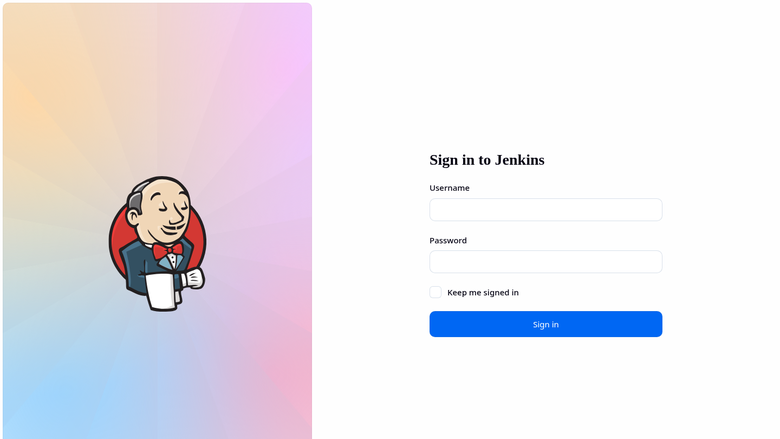
Build, test and deploy on every change
Jenkins is an open source automation server for continuous integration and continuous delivery (CI/CD). Teams use it to build and test code on every change, create packages and Docker images, and deploy to their environments, all described as pipelines in code. This image gives development and DevOps teams a working Jenkins server in minutes, with the tools most builds need already installed.
Who it is for
- Development teams automating builds and tests
- DevOps teams running deployment pipelines
- Companies that want CI/CD on their own server
What is included
- Jenkins 2.580.2 LTS on Ubuntu 24.04 LTS, with the setup wizard already complete
- Java, Git, Docker, Gradle, Ant and Node.js
- The commonly used plugins, already installed
- Nginx as a reverse proxy on port 80
- Helper scripts pass_jenkins.sh and jenkins_status.sh
Secure by default
- No password ships in the image: every instance sets its own Jenkins admin password on first boot
- The Jenkins URL is set to the instance's own address on first boot
- SSH accepts key-based login only
Get started in 4 steps
- Launch the instance (t3a.medium recommended) and allow ports 22 and 80; limit 22 to your own IP
- Wait about 3 minutes, then open http://
- Sign in with admin and your instance ID
- Create your first pipeline from your Git repository
What you get from ProvenCloud on top of the free software
A pre-built and tested image that is ready in minutes, a unique security setup for every server, simple scripts for changing passwords, regular image updates, and help by email whenever you need it. Jenkins is open source software licensed under MIT. Jenkins is a trademark of LF Charities Inc. This image is an independent build by ProvenCloud.
Highlights
- Ready in minutes: launch the instance, open its public IP and sign in. Jenkins LTS with the suggested plugins, Java, Git, Docker, Gradle, Ant and Node.js are already installed, so there is no unlock screen.
- Secure by default: no shared or default passwords. The Jenkins admin account gets its own password on first boot, Jenkins sits behind Nginx, and SSH accepts key-based login only.
- Automate every step: pipelines as code, builds on every push, tests, Docker images and deployments, with a huge plugin library for your tools.
Details
Sold by
Delivery method
Delivery option
64-bit (x86) Amazon Machine Image (AMI)
Latest version
Operating system
Ubuntu 24.04
Deployed on AWS
Features and programs
Financing for AWS Marketplace purchases
AWS Marketplace now accepts line of credit payments through the PNC Vendor Finance program. This program is available to select AWS customers in the US, excluding NV, NC, ND, TN, & VT.

Pricing
Free trial
Try this product free for 5 days according to the free trial terms set by the vendor. Usage-based pricing is in effect for usage beyond the free trial terms. Your free trial gets automatically converted to a paid subscription when the trial ends, but may be canceled any time before that.
Pricing is based on actual usage, with charges varying according to how much you consume. Subscriptions have no end date and may be canceled any time. Alternatively, you can pay upfront for a contract, which typically covers your anticipated usage for the contract duration. Any usage beyond contract will incur additional usage-based costs.
Additional AWS infrastructure costs may apply. Use the AWS Pricing Calculator to estimate your infrastructure costs.
- ...
Dimension | Cost/hour |
|---|---|
t3a.medium Recommended | $0.03 |
c1.xlarge | $0.05 |
c3.2xlarge | $0.08 |
c3.4xlarge | $0.08 |
c3.8xlarge | $0.08 |
c3.xlarge | $0.05 |
c4.2xlarge | $0.08 |
c4.4xlarge | $0.08 |
c4.8xlarge | $0.08 |
c4.xlarge | $0.05 |
Dimensions summary
You pay an hourly software charge for this prebuilt image, billed by AWS alongside your own EC2 compute costs. Pricing scales by the EC2 instance type you launch. Each dimension maps to one instance size across families like general purpose (m, t), compute (c), memory (r, x, z), storage (d, i), and accelerated computing (f, g, p, inf, trn, vt). Larger sizes within a family carry a higher hourly rate, and GPU or specialized families cost more than general-purpose ones. A free trial period applies before hourly charges begin.
Top-of-mind questions for buyers
Each dimension maps to one EC2 instance size you launch, billed per running hour. The charge covers the prebuilt Jenkins image with Java, Maven, Gradle, Ant, Node.js and Docker CE preinstalled. The software is open source with no licence key. You pay separately for the underlying EC2 compute.
The software charge meters running instance-hours. A stopped instance stops accruing the hourly software fee. You may still pay AWS for attached storage, such as the 20 GiB gp3 root volume, while the instance is stopped. Charges resume when you start the instance again.
No. The same image runs across all listed instance families and sizes. You pick the instance type at launch, and the hourly software rate adjusts to match that size. Larger sizes cost more per hour. You can stop, change the instance type, and start again under one subscription.
www.provencloud.io
Helpful?
Vendor refund policy
Software charges are billed hourly, only while your instance runs. You can stop charges at any time by terminating the instance or cancelling your subscription. Charges already incurred are not refundable.

Legal
Vendor terms and conditions
Upon subscribing to this product, you must acknowledge and agree to the terms and conditions outlined in the vendor's End User License Agreement (EULA) .
Content disclaimer
Vendors are responsible for their product descriptions and other product content. AWS does not warrant that vendors' product descriptions or other product content are accurate, complete, reliable, current, or error-free.
Delivery details
64-bit (x86) Amazon Machine Image (AMI)
Amazon Machine Image (AMI)
An AMI is a virtual image that provides the information required to launch an instance. Amazon EC2 (Elastic Compute Cloud) instances are virtual servers on which you can run your applications and workloads, offering varying combinations of CPU, memory, storage, and networking resources. You can launch as many instances from as many different AMIs as you need.
Version release notes
Existing servers keep running as they are and need no action. New launches get this version. To apply the same Ubuntu security fixes to a server you already run, connect over SSH and run sudo apt update && sudo apt full-upgrade.
Jenkins 2.580.2 LTS (was 2.568.3) on Ubuntu 24.04 LTS with Java, Git, Docker, Gradle, Ant, Node.js and Nginx, with all current Ubuntu security updates, including the Brotli library fix for CVE-2026-111497.
A unique Jenkins admin password is set for every instance on first boot.
Includes helper scripts in /home/ubuntu/iscripts for changing passwords.
Additional details
Usage instructions
Once the instance is running, enter http://<instance-public-ip> into your browser. Wait about three minutes the first time while Jenkins starts, then sign in with admin as the username and your instance ID as the password. You can also connect over SSH with the username ubuntu and your Amazon key pair.
Required inbound ports: 22 (SSH) and 80 (Jenkins). For security, allow port 22 only from your own IP address.
Your instance ID is shown in the EC2 console, for example i-0123456789abcdef0. Every instance sets its own passwords on first boot, so no two instances share a password.
Change your password after the first sign-in from your user menu in Jenkins, or connect over SSH and run sudo bash /home/ubuntu/iscripts/pass_jenkins.sh. jenkins_status.sh in the same folder shows installed tool versions.
The image serves plain HTTP so it works on a bare IP address. Before using it in production, add your own domain and an SSL certificate, or place it behind a load balancer with HTTPS.
Resources
Vendor resources
Support
Vendor support
Email: support@provencloud.io
Support page: https://www.provencloud.io/support
Response time: we reply to every support email within 1 business day.
Hours: Monday to Friday, 10:00 to 19:00 IST (UTC+05:30)
Help with: first sign-in, passwords, domains and HTTPS, configuration questions, and upgrading to new versions.
Billing and refunds for this subscription are handled by AWS Marketplace.
AWS infrastructure support
AWS Support is a one-on-one, fast-response support channel that is staffed 24x7x365 with experienced and technical support engineers. The service helps customers of all sizes and technical abilities to successfully utilize the products and features provided by Amazon Web Services.
Similar products
This is a repackaged open source software product wherein additional charges apply for a secure, ready-to-use ownCloud 10.16 file sync and share server. Store, sync and share files with your team from desktop and mobile apps about 3 minutes after launch, on a server you control. Every instance gets its own passwords.
This is a repackaged open source software product wherein additional charges apply for a secure, ready-to-use Zabbix 7.4 monitoring server. Go from launch to your first live dashboard in about 3 minutes: monitor servers, network devices, applications and websites, and get an alert the moment something breaks. HTTPS is on by default and every instance gets its own passwords.
This is a repackaged open source software product wherein additional charges apply for a secure, ready-to-use SuiteCRM 8.10 CRM server. Track leads, deals, quotes and support cases in one CRM about 3 minutes after launch, with no per-user fees. Every instance gets its own passwords.

Customer reviews
No customer reviews yet
Be the first to review this product . We've partnered with PeerSpot to gather customer feedback. You can share your experience by writing or recording a review, or scheduling a call with a PeerSpot analyst.