AWS Security Blog
Category: Intermediate (200)
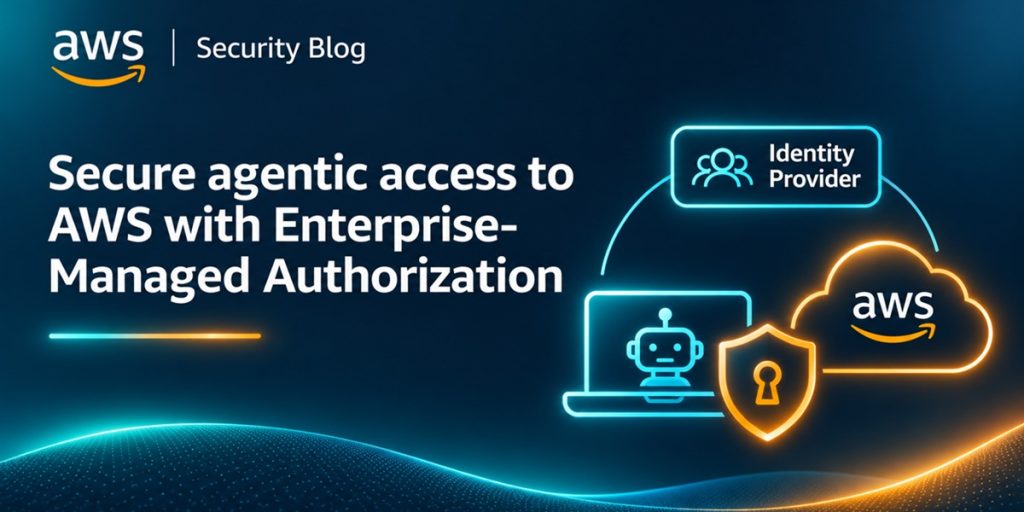
Secure agentic access to AWS with Enterprise-Managed Authorization
AWS Sign-In is introducing support for Enterprise-Managed Authorization (EMA) using the Identity Assertion JWT Authorization Grant (ID-JAG), enabling organizations to securely authorize AI agents to access AWS MCP Server through their existing enterprise identity providers (IdPs), such as Okta. With this capability, organizations can centrally manage which applications can access Amazon Web Services (AWS) resources […]
Planning for 99.99 percent availability with the Amazon Cognito Plus feature plan
Amazon Cognito handles sign-in and access control for users, AI agents, and microservices with managed user directories, social and enterprise federation, and passwordless sign-in with passkeys or one-time passwords. Sign-in is the front door to your application. If your customer identity and access management (CIAM) layer is unavailable, users can’t sign in or refresh their […]
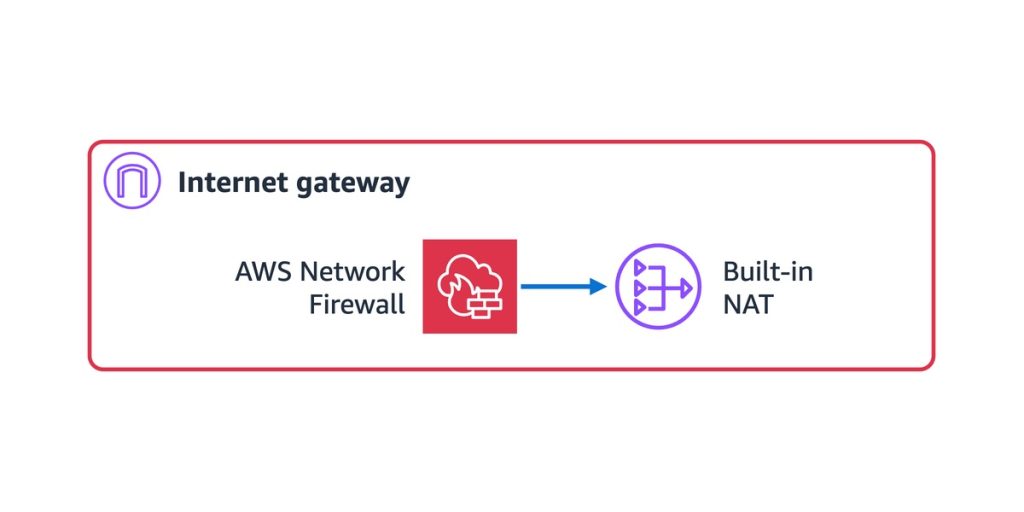
AWS Network Firewall introduces automated internet firewall mode (Preview)
AWS Network Firewall now offers automated internet firewall mode (Preview). In this mode, Network Firewall applies your centrally defined rules to traffic at the internet gateway of each of your virtual private clouds (VPCs). It also performs built-in network address translation (NAT) for outbound-only connections. A subnet that reaches the internet needs only one route, […]

Know the identity behind the role: Authorize and audit with trusted identity propagation
Today, AWS is making it easier to grant access and audit activity based on the user or workload (a non-human caller, such as an application, service, or an automated workflow) behind an AWS Identity and Access Management (IAM) role. Trusted identity propagation (TIP) carries the identity of the user or workload with each AWS request, […]
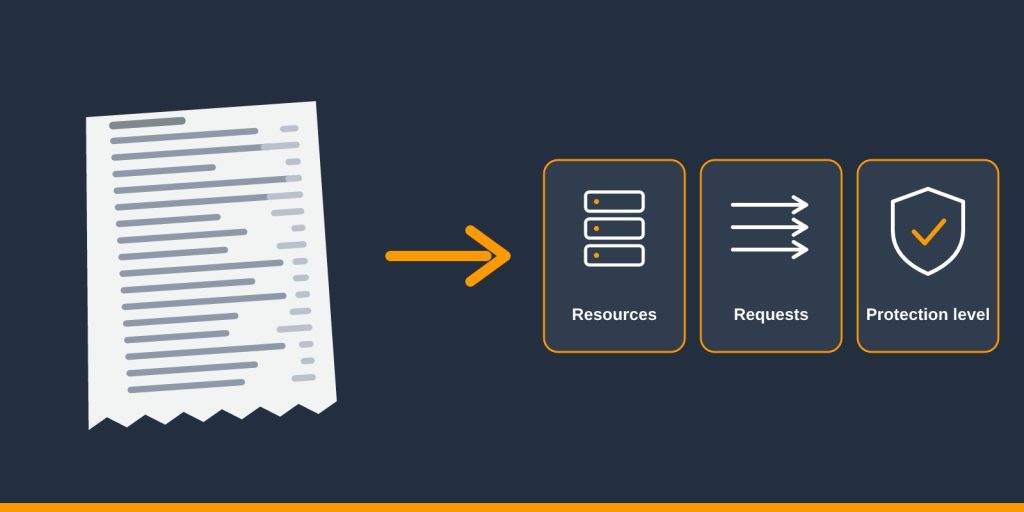
Introducing AWS WAF simplified pricing
November 25, 2026: We’ve updated this post to clarify the date customers will see changes. AWS WAF pricing is changing to make your bill easier to predict. Starting February 1, 2027, your bill will be based on three dimensions: the resources you protect, the traffic AWS WAF inspects, and the level of protection you apply […]
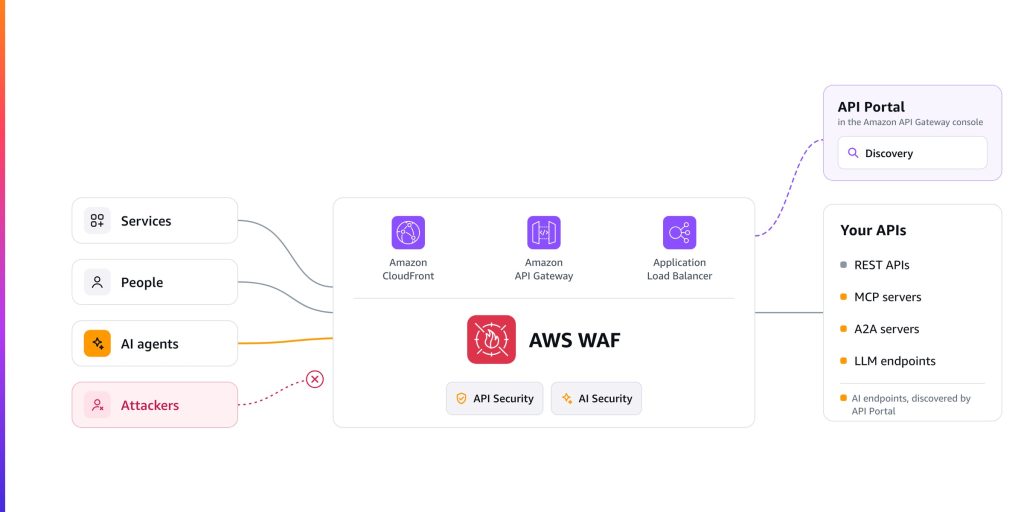
Introducing API and AI security on AWS, from discovery to protection
APIs have run digital businesses for more than a decade. For a while, there seemed to be nothing new left to say about them. That changed in 2026, when AI endpoints joined them. Teams now run large language model (LLM) inference endpoints, Model Context Protocol (MCP) servers, and Agent2Agent (A2A) servers beside their REST APIs, […]
Step-up authentication: how to right-size authentication to risk
Not every action a user takes in an application carries the same risk. Viewing an account balance in a banking application isn’t the same as wiring several thousand dollars to a new payee. In practice, though, many applications ask users to prove their identity once at sign-in and then treat every action the same from […]

Addressing protocol security gaps in multi-tenant Kubernetes
Protocols like Android Debug Bridge (ADB) and Web Real-Time Communication (WebRTC), by default, use unencrypted channels for network communications and don’t support enterprise authentication mechanisms like JSON Web Tokens (JWTs). In a multi-tenant Kubernetes cluster—including Amazon Elastic Kubernetes Service (Amazon EKS)—pods can reach other tenants’ open ports by default unless you configure network policies to […]
Introducing AWS account access manager: IAM role flexibility with centralized workforce access
AWS Identity and Access Management (IAM) is introducing account access manager, a flexible new way to manage workforce access to your Amazon Web Services (AWS) accounts. This combines the IAM role flexibility your teams already rely on, delivered through the centralized federation of AWS IAM Identity Center, with user-level visibility built-in. Account access manager streamlines […]
Building your AI vulnerability harness, Part 1
Vulnerability scanners produce findings faster than manual triage can process them. Your developers ship more code with more dependencies, and the volume of candidate findings grows with it. Many findings a scanner produces are unlikely to be exploited. The ones that matter need to reach an engineer fast, with enough evidence that they can act […]