AWS Security Blog
Category: Technical How-to

Make post-quantum cryptography updates routine with AWS-LC
As your organization plans upgrades to post-quantum cryptography (PQC), you should also think about cryptographic agility to more easily update algorithms used to protect your data. Changes to cryptography and related protocols aren’t new, but PQC is accelerating the pace at which organizations must add new algorithms and remove old ones to keep up with […]
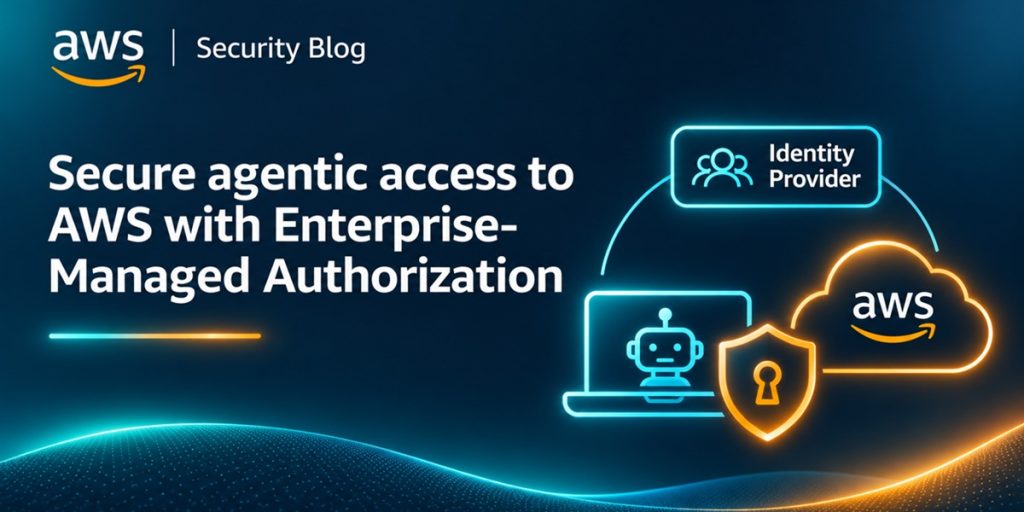
Secure agentic access to AWS with Enterprise-Managed Authorization
AWS Sign-In is introducing support for Enterprise-Managed Authorization (EMA) using the Identity Assertion JWT Authorization Grant (ID-JAG), enabling organizations to securely authorize AI agents to access AWS MCP Server through their existing enterprise identity providers (IdPs), such as Okta. With this capability, organizations can centrally manage which applications can access Amazon Web Services (AWS) resources […]
Planning for 99.99 percent availability with the Amazon Cognito Plus feature plan
Amazon Cognito handles sign-in and access control for users, AI agents, and microservices with managed user directories, social and enterprise federation, and passwordless sign-in with passkeys or one-time passwords. Sign-in is the front door to your application. If your customer identity and access management (CIAM) layer is unavailable, users can’t sign in or refresh their […]
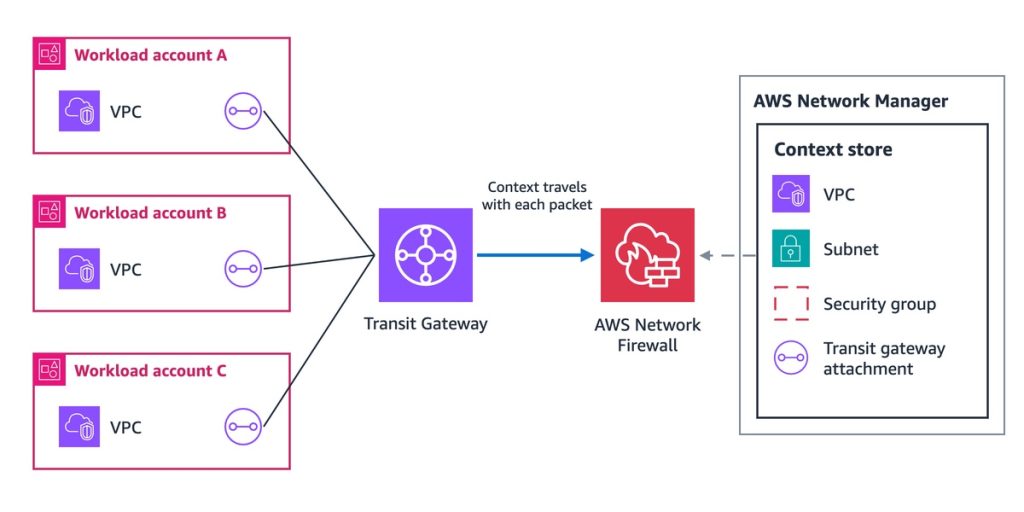
Introducing context-aware rules for AWS Network Firewall
AWS Network Firewall now supports context-aware rules, which match traffic by the AWS resources that send and receive it instead of by IP address. A rule can name a virtual private cloud (VPC), a subnet, a security group, or a transit gateway attachment. Rules that match on IP addresses have to keep up with every […]
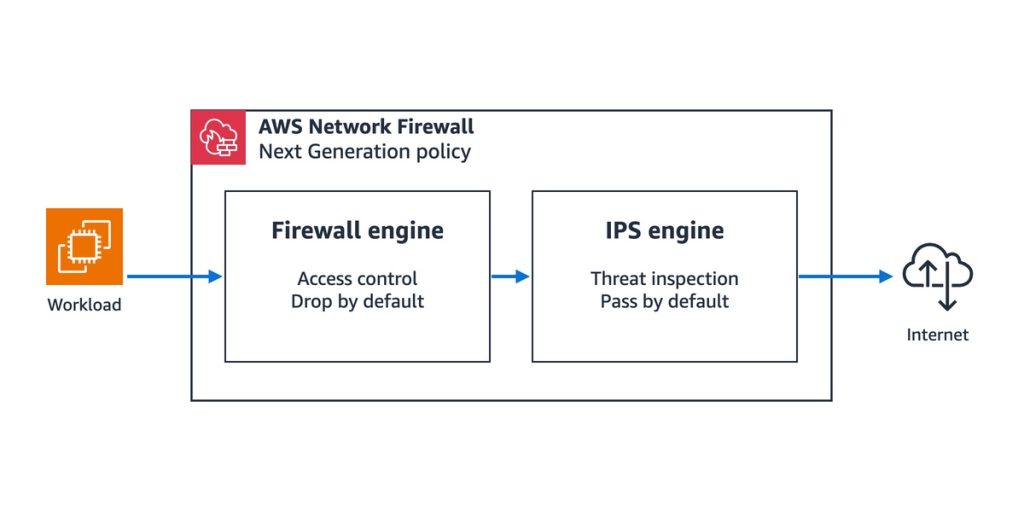
Introducing AWS Network Firewall Next Generation policy
When it comes to inspecting network traffic, many security teams want two things from a firewall. They want to allow only the traffic each application needs, and they want each allowed connection checked for known threats. Today, you can do both with AWS Network Firewall, a stateful, managed network firewall and intrusion detection and prevention […]
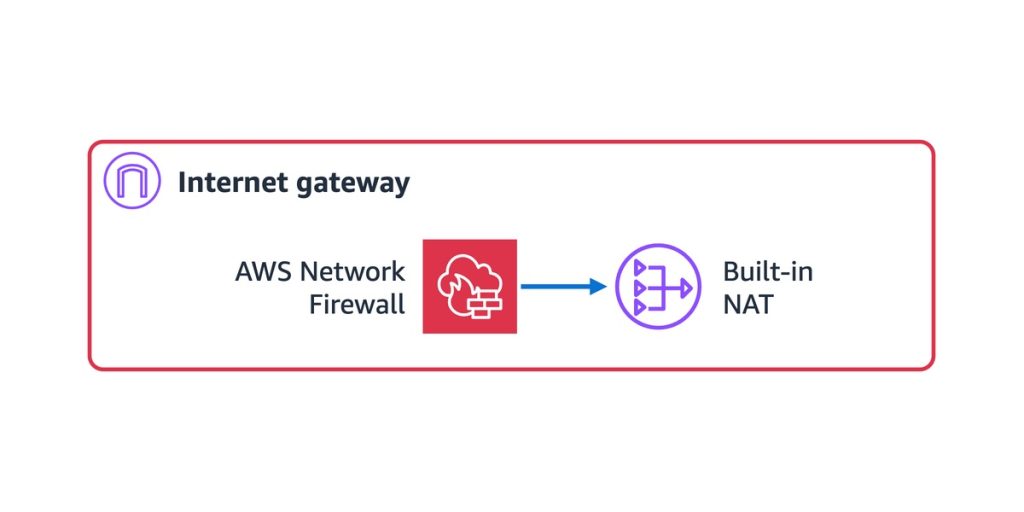
AWS Network Firewall introduces automated internet firewall mode (Preview)
AWS Network Firewall now offers automated internet firewall mode (Preview). In this mode, Network Firewall applies your centrally defined rules to traffic at the internet gateway of each of your virtual private clouds (VPCs). It also performs built-in network address translation (NAT) for outbound-only connections. A subnet that reaches the internet needs only one route, […]

Know the identity behind the role: Authorize and audit with trusted identity propagation
Today, AWS is making it easier to grant access and audit activity based on the user or workload (a non-human caller, such as an application, service, or an automated workflow) behind an AWS Identity and Access Management (IAM) role. Trusted identity propagation (TIP) carries the identity of the user or workload with each AWS request, […]

How AWS Security Incident Response triages your security findings
AWS Security Incident Response continuously triages the threat findings from Amazon GuardDuty and AWS Security Hub CSPM, but most of that work never shows up as a case. If cases are all you look at, it’s hard to tell whether the service is working at all, and that’s the question I hear most often when […]

Step-up authentication: how to right-size authentication to risk
Not every action a user takes in an application carries the same risk. Viewing an account balance in a banking application isn’t the same as wiring several thousand dollars to a new payee. In practice, though, many applications ask users to prove their identity once at sign-in and then treat every action the same from […]

Detecting cross-cloud lateral movement with AWS Security Hub
Most organizations run a multicloud estate, and so do the attackers targeting them. An adversary who compromises an identity in one provider follows that identity wherever it leads, including across a federated trust into a second cloud service provider. The signals enumerating this scenario are rarely missing; the problem is that they live in separate […]