AWS Security Blog
Category: Advanced (300)
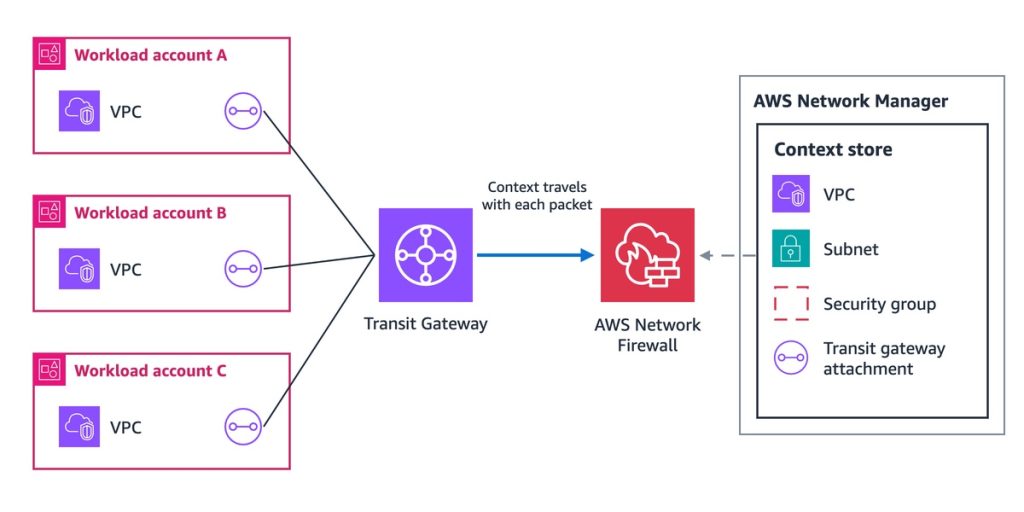
Introducing context-aware rules for AWS Network Firewall
AWS Network Firewall now supports context-aware rules, which match traffic by the AWS resources that send and receive it instead of by IP address. A rule can name a virtual private cloud (VPC), a subnet, a security group, or a transit gateway attachment. Rules that match on IP addresses have to keep up with every […]
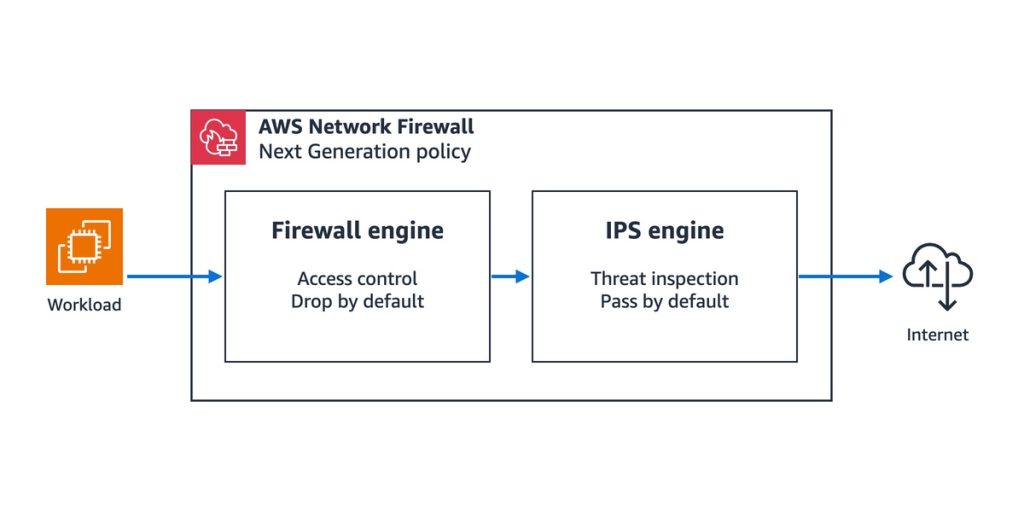
Introducing AWS Network Firewall Next Generation policy
When it comes to inspecting network traffic, many security teams want two things from a firewall. They want to allow only the traffic each application needs, and they want each allowed connection checked for known threats. Today, you can do both with AWS Network Firewall, a stateful, managed network firewall and intrusion detection and prevention […]

How AWS Security Incident Response triages your security findings
AWS Security Incident Response continuously triages the threat findings from Amazon GuardDuty and AWS Security Hub CSPM, but most of that work never shows up as a case. If cases are all you look at, it’s hard to tell whether the service is working at all, and that’s the question I hear most often when […]

Detecting cross-cloud lateral movement with AWS Security Hub
Most organizations run a multicloud estate, and so do the attackers targeting them. An adversary who compromises an identity in one provider follows that identity wherever it leads, including across a federated trust into a second cloud service provider. The signals enumerating this scenario are rarely missing; the problem is that they live in separate […]

Help defend against memory poisoning in Amazon Bedrock AgentCore with multi-layer write validation
Amazon Bedrock AgentCore Memory helps AI agents maintain context across sessions through persistent short-term and long-term memory. Because memory content is automatically retrieved and injected into future conversations, the integrity of what gets written to memory directly shapes future agent behavior, which makes the write path a valuable control point to strengthen. AgentCore already provides […]
Simplify cross-partition access with AWS IAM outbound identity federation
You can now use tokens from AWS Identity and Access Management (IAM) outbound federation to assume roles in other Amazon Web Services (AWS) partitions. When your workloads run across AWS partitions such as Commercial, China, GovCloud (US), and European Sovereign Cloud, a workload in one partition might need to access resources or communicate with AWS […]

Beyond DKIM key rotation: understanding email replay attacks
As the email administrator for your organization’s domain, you receive a Domain-based Message Authentication, Reporting, and Conformance (DMARC) aggregate report showing email passing DomainKeys Identified Mail (DKIM) verification as though it came from your domain, sent from IP addresses you don’t recognize to recipients you didn’t contact. To clear the issue, you rotate your DKIM […]
Best practices for integrating IAM Roles Anywhere with your PKI
Using temporary credentials is a security best practice to reduce the risk from credentials getting compromised. With AWS IAM Roles Anywhere, now your workloads outside of Amazon Web Services (AWS) will be able to access AWS resources by obtaining temporary security credentials in AWS Identity and Access Management (IAM). IAM Roles Anywhere relies on public […]

Managing identity source transition for AWS IAM Identity Center
October 20, 2026: This post was republished to reflect the new migration capability from Active Directory to an external identity provider (IdP) or the Identity Center directory, now available in IAM Identity Center. September 2, 2026: This post was republished to include Active Directory migration strategies and automation for permission sets. AWS IAM Identity Center […]
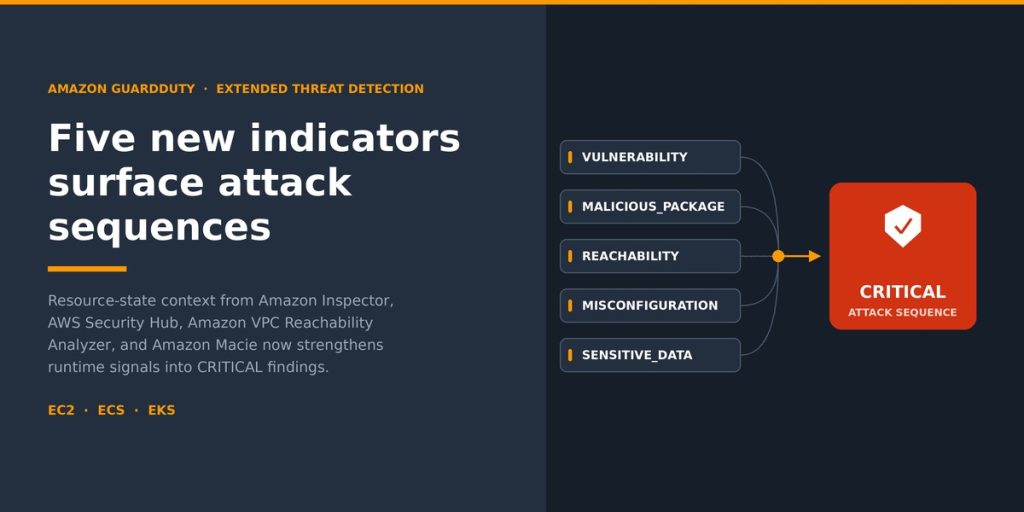
GuardDuty Extended Threat Detection has added five new indicators to surface attack sequences
Amazon GuardDuty Extended Threat Detection correlates weak GuardDuty signals into a single, critical-severity attack sequence finding when their composition crosses a threshold of credibility. On May 20, 2026, the service started attaching five new indicator types to those sequences: MALICIOUS_PACKAGE, MISCONFIGURATION, REACHABILITY, SENSITIVE_DATA, and VULNERABILITY. For more information, see Document history for Amazon GuardDuty and […]