AWS Security Blog
Category: Artificial Intelligence
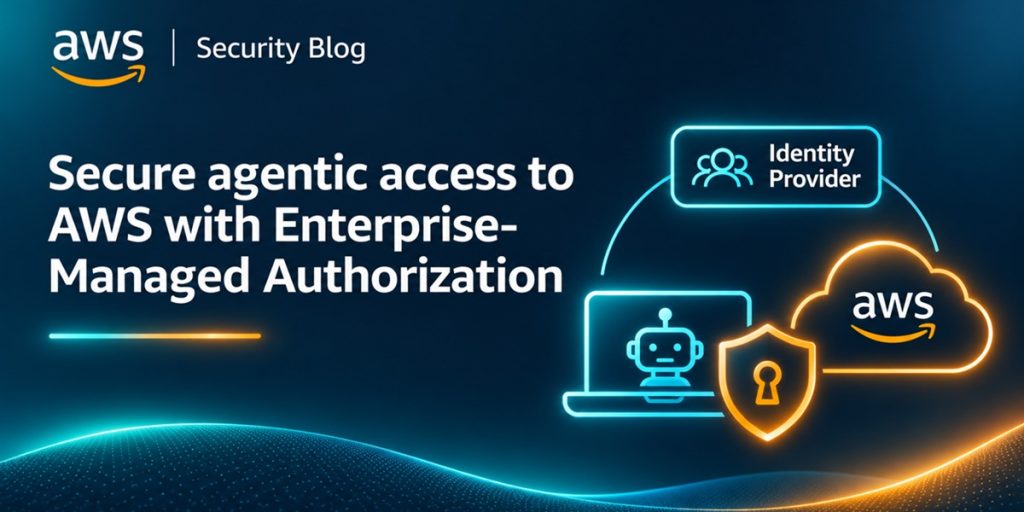
Secure agentic access to AWS with Enterprise-Managed Authorization
AWS Sign-In is introducing support for Enterprise-Managed Authorization (EMA) using the Identity Assertion JWT Authorization Grant (ID-JAG), enabling organizations to securely authorize AI agents to access AWS MCP Server through their existing enterprise identity providers (IdPs), such as Okta. With this capability, organizations can centrally manage which applications can access Amazon Web Services (AWS) resources […]
Delegate user access to AI agents with Amazon Cognito token exchange
Suppose you use a restaurant review app to check reviews, book tables, and email invitations to your friends. With OAuth 2.0, the app sends you to the authorization server that your email provider trusts, where you sign in and approve only the access the app requested, such as the contacts.read and messages.send scopes. The review […]
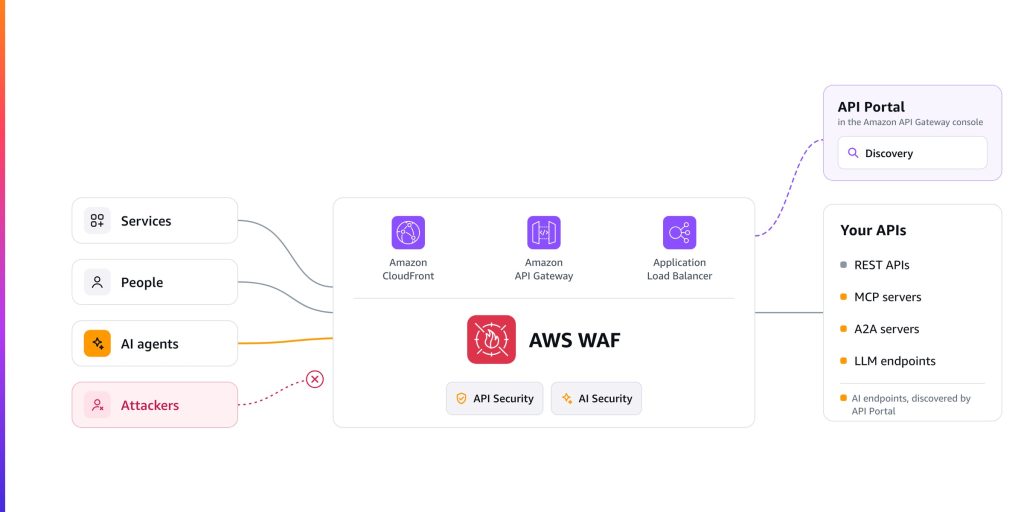
Introducing API and AI security on AWS, from discovery to protection
APIs have run digital businesses for more than a decade. For a while, there seemed to be nothing new left to say about them. That changed in 2026, when AI endpoints joined them. Teams now run large language model (LLM) inference endpoints, Model Context Protocol (MCP) servers, and Agent2Agent (A2A) servers beside their REST APIs, […]

Chinese-nexus actor’s Cairn AI agents found a zero-day on their own
Amazon Threat Intelligence is sharing findings from an investigation into a Chinese-nexus threat actor using autonomous AI agents to conduct hacking operations with minimal human involvement. The actor gave the agents a simple goal: “obtain shell access.” During the campaign, the agents found a zero-day in an open-source application and used it to gain full […]
Securely exposing Amazon Bedrock AgentCore Runtime
Amazon Bedrock AgentCore Runtime delivers a secure serverless environment to deploy AI agents and tools at scale. When you start talking to your agent, the runtime launches a dedicated isolated session that runs in its own dedicated microVM with a completely sandboxed CPU, memory, and filesystem allocation. This provides strict data governance, helps to prevent […]

Help defend against memory poisoning in Amazon Bedrock AgentCore with multi-layer write validation
Amazon Bedrock AgentCore Memory helps AI agents maintain context across sessions through persistent short-term and long-term memory. Because memory content is automatically retrieved and injected into future conversations, the integrity of what gets written to memory directly shapes future agent behavior, which makes the write path a valuable control point to strengthen. AgentCore already provides […]
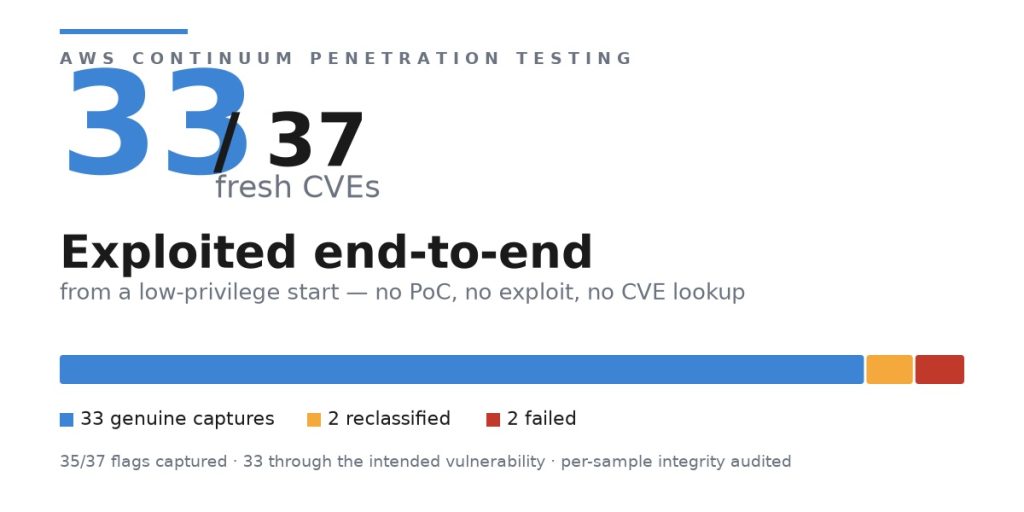
AWS Security Agent (now part of AWS Continuum) exploited 33 of 37 new real-world CVEs
We applied AWS Security Agent (now part of AWS Continuum), our autonomous penetration-testing agent, to 37 real, recently disclosed Common Vulnerabilities and Exposures (CVEs), each packaged as a live, containerized target with a flag hidden at the vulnerability’s intended sink. Starting from an unauthenticated or low-privilege position (an endpoint URL and a one-line hint, no […]
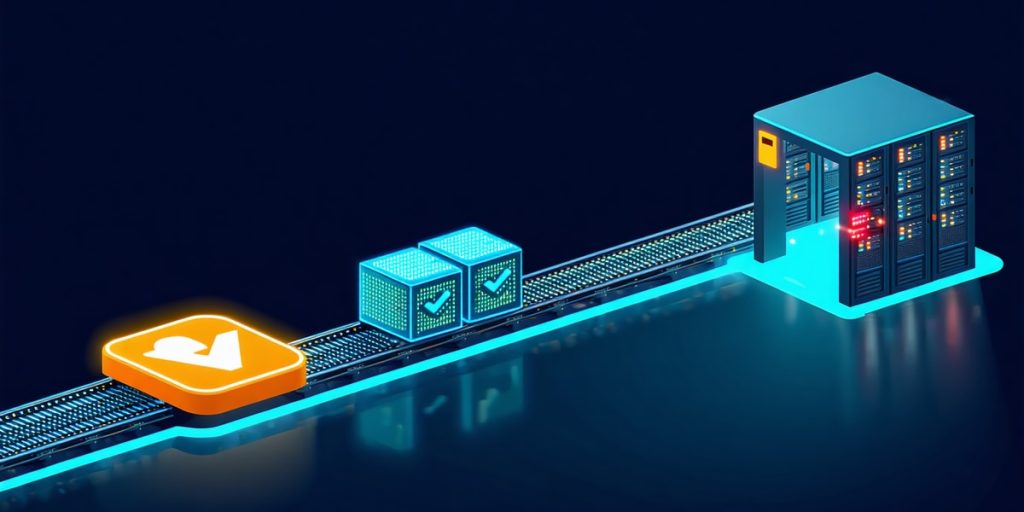
Penetration testing every deployment with AWS Continuum
Most security tooling that fits into a CI/CD pipeline—static analysis (SAST), software composition analysis (SCA), and dynamic scanners (DAST)—flags potential issues from patterns and signatures. A flagged pattern shows you where to look; penetration testing is what confirms whether something is actually exploitable. That confirmation has traditionally come from a periodic, out-of-band engagement that runs […]
Configuring your AI vulnerability harness, Part 2: The steering file
This post shows you how to configure an AI model to perform structured, evidence-based vulnerability triage with the consistency of a seasoned security analyst. You’ll learn the design decisions behind five configuration sections that enforce structural verification, evidence-based scoring, and infrastructure-aware prioritization across every analysis session. Our companion post—Building your AI vulnerability harness—covered the architecture; […]
Building your AI vulnerability harness, Part 1
Vulnerability scanners produce findings faster than manual triage can process them. Your developers ship more code with more dependencies, and the volume of candidate findings grows with it. Many findings a scanner produces are unlikely to be exploited. The ones that matter need to reach an engineer fast, with enough evidence that they can act […]