Sold by: IENAI Space, S.L.
Deployed on AWS
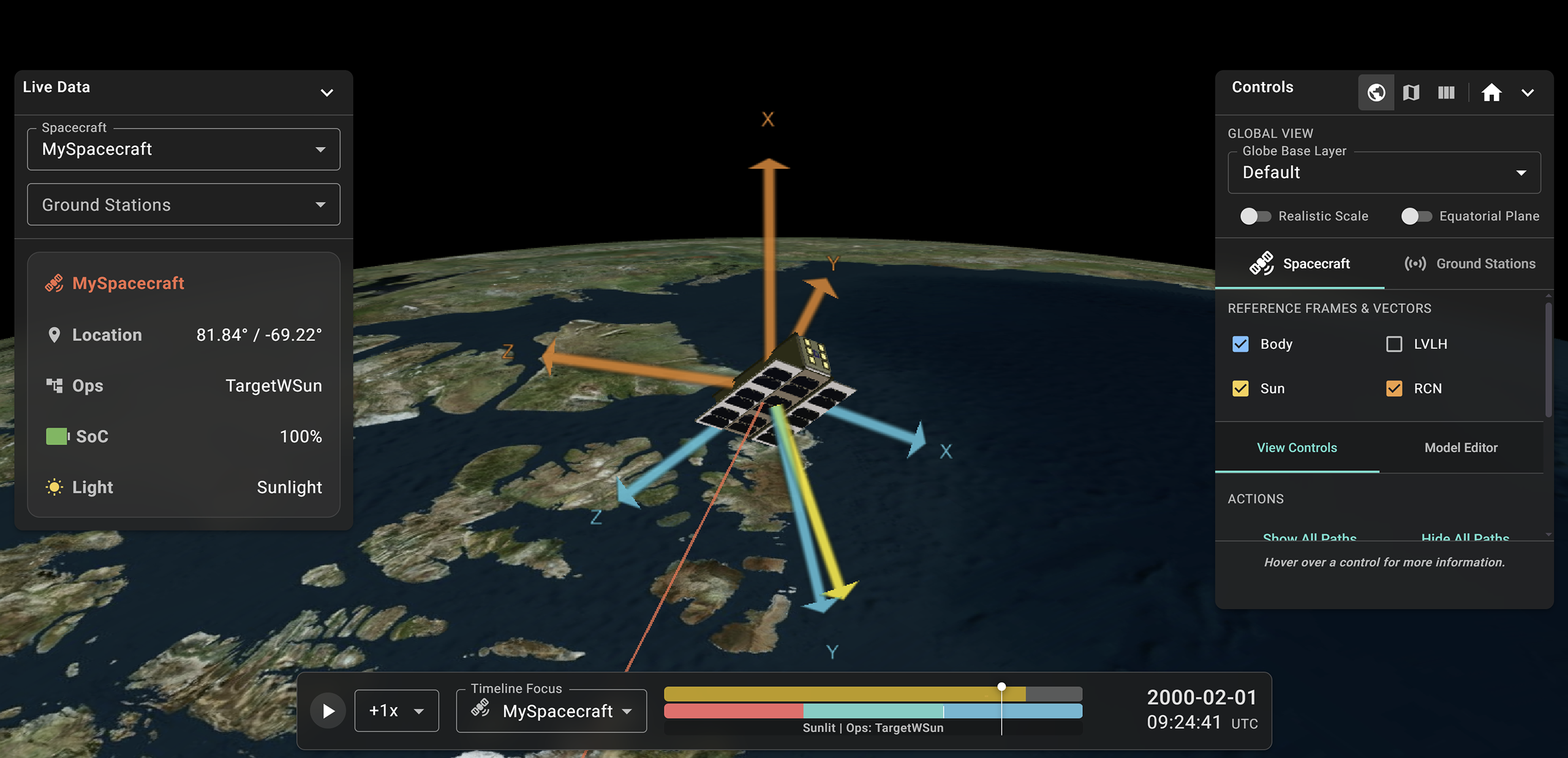
360™ by IENAI Space is a cloud-based SaaS platform for space mission analysis and design, helping spacecraft teams model, simulate, and optimize every phase of a mission in one environment. Built on a high-fidelity digital-twin engine, 360™ covers orbit propagation, propulsion and maneuver design (chemical and electric), power systems, constellation geometry, ground station coverage, and configurable perturbation models. Its no-code-friendly interface, 360™ Studio, guides mission analysts through pre-built analysis packages and interactive 2D/3D visualizations, replacing fragmented scripts and legacy tools with a single streamlined workflow. Running on AWS, 360™ gives space companies secure, scalable, on-demand access to advanced mission engineering, from early feasibility studies to detailed operations planning, without the cost or complexity of managing infrastructure in-house.
Overview
Video
Operations Simulator
Video
Constellation Analysis
Video
Mission Design
Video
COTS Catalogue
Video
Product video
Space mission engineering still depends heavily on fragmented, code-intensive legacy tools that require specialized expertise and slow down iteration. 360™ transforms this process with a single cloud-native platform that enables mission teams to model, simulate, and optimize complete space missions faster and more collaboratively.
With 360™, engineers can perform orbit propagation, maneuver and propulsion design, power analysis, constellation and coverage studies, and ground-station analysis within one integrated environment, eliminating the need to move between disconnected tools and scripts.
The platform is available in two complementary forms:
- 360™ Studio - a guided, no-code web interface that allows users to run advanced mission analyses without writing custom software.
- 360™ Library - a Python package for experienced engineers who need maximum flexibility to build tailored simulations, extend models, and integrate 360™ directly into their own workflows and toolchains.
Why teams choose 360™
Faster mission design - Parallel cloud computing reduces propagation and simulation times by up to 50% compared with comparable industry tools, accelerating trade-offs and decision-making.
Trusted engineering accuracy - The platform has been independently benchmarked against GMAT and STK for orbital dynamics, perturbation models, and geodetic calculations.
Built-in optimization - AI-assisted maneuver and subsystem design, together with Monte Carlo analysis, helps improve mission robustness without relying on external optimization frameworks.
Accessible and extensible - Use the no-code interface for rapid adoption across multidisciplinary teams, or leverage the Python library for deep customization and automation.
Delivered as a SaaS solution on AWS, 360™ provides on-demand scalability for compute-intensive simulations, centralized updates, and enterprise-grade security and compliance. The subscription model is designed to support organizations ranging from universities and research groups to institutional and commercial mission-design teams.
License Options
IRIS (Consolidated)
- 1-3 users
- Access license + 12-month subscription
- 10-hour training package
- 3-month subscription included
- 8 hours/month development support
- 10k AWS credits/month
- MENTOR license included
IRIS (Play & Pause)
- 1-3 users
- Access license + monthly subscription
- 10-hour training package
- 3-month subscription included
- 8 hours/month development support
- 10k AWS credits/month
- MENTOR license included
HERMES (Consolidated)
- 4-10 users
- Access license + 12-month subscription
- 20-hour training package
- 3-month subscription included
- 16 hours/month development support
- 30k AWS credits/month
- MENTOR license included
HERMES (Play & Pause)
- 4-10 users
- Access license + monthly subscription
- 20-hour training package
- 3-month subscription included
- 16 hours/month development support
- 30k AWS credits/month
- MENTOR license included
PEGASUS (Consolidated)
- 11-30 users
- Access license + 12-month subscription
- 40-hour training package
- 3-month subscription included
- 32 hours/month development support
- 90k AWS credits/month
- MENTOR license included
PEGASUS (Play & Pause)
- 11-30 users
- Access license + monthly subscription
- 40-hour training package
- 3-month subscription included
- 32 hours/month development support
- 90k AWS credits/month
- MENTOR license included
Whether your goal is to accelerate early mission studies, scale constellation analysis, or deploy a collaborative cloud-based mission-engineering environment, 360™ gives your team the speed, accuracy, and flexibility needed to move from concept to mission with confidence.
Highlights
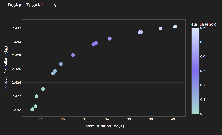
- Space Mission Analysis A high-fidelity propagator supports mission design from early Phase 0 studies through operations, with tunable-fidelity environment models (gravity, drag, solar radiation pressure, third-body effects). Constellation, ground station, and coverage tools derive key mission metrics (revisit time, number of accesses, total coverage) for custom or Walker-pattern geometries, turning orbital mechanics into actionable mission performance data.
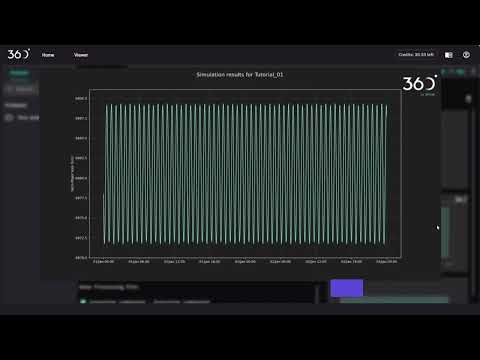
- Space Mobility Covers chemical and electric propulsion, impulsive and low-thrust maneuver design, and constellation deployment/phasing, including launch vehicle trade-offs. Built-in optimization algorithms compute mission-ready pointing and thrusting strategies automatically, revealing cost/time Pareto trade-offs without manual iteration. A logic-driven operations state machine models payload activity, power use, and ground contacts across the full mission timeline.
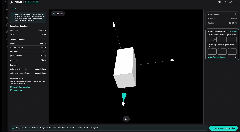
- Concurrent Engineering Design A digital-twin approach lets users build spacecraft with linked propulsion, power, ADCS, structures, and sensor subsystems in one connected simulation core. An extensive COTS hardware catalogue grounds designs in real, procurable components at any stage. Changing one subsystem instantly propagates through mission-level results, enabling rapid trade-offs without rebuilding models or exporting data between tools.
Details
Sold by
Delivery method
Deployed on AWS
Features and programs
Financing for AWS Marketplace purchases
AWS Marketplace now accepts line of credit payments through the PNC Vendor Finance program. This program is available to select AWS customers in the US, excluding NV, NC, ND, TN, & VT.

Pricing
Pricing is based on the duration and terms of your contract with the vendor. This entitles you to a specified quantity of use for the contract duration. If you choose not to renew or replace your contract before it ends, access to these entitlements will expire.
Additional AWS infrastructure costs may apply. Use the AWS Pricing Calculator to estimate your infrastructure costs.
Dimension | Description | Cost/month |
|---|---|---|
MENTOR | Access License + 12-month subscription, 10-hour training, 8-hour development support, 10k AWS credits/month | $5,600.00 |
Dimensions summary
This listing offers one pricing option: the MENTOR access license. You buy it as a 12-month subscription billed under a contract. The single purchase bundles software access with onboarding and support services. You receive 10 hours of training and 8 hours of development support. You also get 10,000 AWS credits each month for the high-performance computing that runs mission simulations. Because there is one dimension, pricing does not scale across tiers or user counts here. You pay a set contract price for the full package over the subscription term.
Top-of-mind questions for buyers
The MENTOR license supports a small team of 1 to 3 users. All users share the same license and its bundled training, support, and computing resources. If your team grows beyond this range, you would need to discuss other options directly with the vendor.
The credits fund high-performance computing that runs mission propagation and design optimization jobs. Under this license you can run up to 10 concurrent design and optimization jobs. The computing resource is measured in virtual CPU hours, giving you capacity for simulation workloads each month.
The 10 hours of onboarding training is a starting allotment to get your team running. The engineering support is provided monthly during the subscription. The listing bundles these services with the 12-month software access, so support recurs across the contract term alongside the monthly computing credits.
ienai.space
Helpful?
Vendor refund policy
Either Party may terminate these Terms by giving thirty (30) days' prior written notice. Immediate termination is permitted if the Customer materially breaches these Terms and fails to remedy the breach within thirty (30) days of notice, or if the breach cannot be remedied. Requests for termination or refunds must be sent to sales@ienai.space .

Legal
Vendor terms and conditions
Upon subscribing to this product, you must acknowledge and agree to the terms and conditions outlined in the vendor's End User License Agreement (EULA) .
Content disclaimer
Vendors are responsible for their product descriptions and other product content. AWS does not warrant that vendors' product descriptions or other product content are accurate, complete, reliable, current, or error-free.
Delivery details
Software as a Service (SaaS)
SaaS delivers cloud-based software applications directly to customers over the internet. You can access these applications through a subscription model. You will pay recurring monthly usage fees through your AWS bill, while AWS handles deployment and infrastructure management, ensuring scalability, reliability, and seamless integration with other AWS services.
Resources
Vendor resources
Support
Vendor support
AWS infrastructure support
AWS Support is a one-on-one, fast-response support channel that is staffed 24x7x365 with experienced and technical support engineers. The service helps customers of all sizes and technical abilities to successfully utilize the products and features provided by Amazon Web Services.
Similar products
Amnic AI stands out as a cutting-edge FinOps platform that harnesses intelligent, context-aware AI agents alongside intuitive natural language queries to empower DevOps, Finance, and Leadership teams in streamlining token management, eliminating unnecessary cloud expenditures, and achieving unified cost optimization goals.
Streamline your emergency planning to ensure readiness, minimize response times, and equip teams for fast and accurate reunification. Create and manage safety plans, efficiently track drills, and accelerate response by providing first responders access to critical information, including site maps, floor plans, EOPs, and call lists.
ConstellationOS is the AI-native operating system for space networks, forecasting degradation minutes ahead and committing reroutes under policy across your fleet.
Desktop360 powered by Omnissa Horizon Cloud on AWS Workspaces Core enables your workforce to work from anywhere by deploying Windows based virtual desktops (up to 10 virtual desktops and/or five virtual applications initially) on AWS Workspaces Core (your existing or a new subscription) with Omnissa Horizon Cloud.
Customer reviews
No customer reviews yet
Be the first to review this product . We've partnered with PeerSpot to gather customer feedback. You can share your experience by writing or recording a review, or scheduling a call with a PeerSpot analyst.