AWS Security Blog

The New AWS Organizations User Interface Makes Managing Your AWS Accounts Easier
With AWS Organizations—launched on February 27, 2017—you can easily organize accounts centrally and set organizational policies across a set of accounts. Starting today, the Organizations console includes a tree view that allows you to manage accounts and organizational units (OUs) easily. The new view also makes it simple to attach service control policies (SCPs) to individual […]

Centrally Manage Tags and Search for Resources Across AWS Services by Using the New Resource Groups Tagging API
Today, we made available the new Resource Groups Tagging API that makes it easier for you to centrally manage tags and search for resources across AWS services and regions. This new API includes five operations that enable you to programmatically tag and untag resources, list resources with a specific tag, and list unique tag keys […]

Easily Tag Amazon EC2 Instances and Amazon EBS Volumes on Creation
In 2010, AWS launched resource tagging for Amazon EC2 instances and other EC2 resources. Since that launch, we have raised the allowable number of tags per resource from 10 to 50 and made tags more useful with the introduction of resource groups and Tag Editor. AWS customers use tags to track ownership, drive their cost accounting […]

How to Use Service Control Policies in AWS Organizations to Enforce Healthcare Compliance in Your AWS Account
AWS customers with healthcare compliance requirements such as the U.S. Health Insurance Portability and Accountability Act (HIPAA) and Good Laboratory, Clinical, and Manufacturing Practices (GxP) might want to control access to the AWS services their developers use to build and operate their GxP and HIPAA systems. For example, customers with GxP requirements might approve AWS […]

How to Monitor Host-Based Intrusion Detection System Alerts on Amazon EC2 Instances
September 9, 2021: Amazon Elasticsearch Service has been renamed to Amazon OpenSearch Service. See details. To help you secure your AWS resources, we recommend that you adopt a layered approach that includes the use of preventative and detective controls. For example, incorporating host-based controls for your Amazon EC2 instances can restrict access and provide appropriate […]

Move Over JSON – Policy Summaries Make Understanding IAM Policies Easier
Today, we added policy summaries to the IAM console, making it easier for you to understand the permissions in your AWS Identity and Access Management (IAM) policies. Instead of reading JSON policy documents, you can scan a table that summarizes services, actions, resources, and conditions for each policy. You can find this summary on the […]

How to Help Protect Dynamic Web Applications Against DDoS Attacks by Using Amazon CloudFront and Amazon Route 53
Using a content delivery network (CDN) such as Amazon CloudFront to cache and serve static text and images or downloadable objects such as media files and documents is a common strategy to improve webpage load times, reduce network bandwidth costs, lessen the load on web servers, and mitigate distributed denial of service (DDoS) attacks. AWS […]

Updated CJIS Workbook Now Available by Request
April 27, 2021: The information in this blog post has been deprecated. For the latest information on CJIS, visit Using AWS for Criminal Justice Information Solutions. The need for guidance when implementing Criminal Justice Information Services (CJIS)–compliant solutions has become of paramount importance as more law enforcement customers and technology partners move to store and […]

How to Access the AWS Management Console Using AWS Microsoft AD and Your On-Premises Credentials
AWS Directory Service for Microsoft Active Directory, also known as AWS Microsoft AD, is a managed Microsoft Active Directory (AD) hosted in the AWS Cloud. Now, AWS Microsoft AD makes it easy for you to give your users permission to manage AWS resources by using on-premises AD administrative tools. With AWS Microsoft AD, you can […]
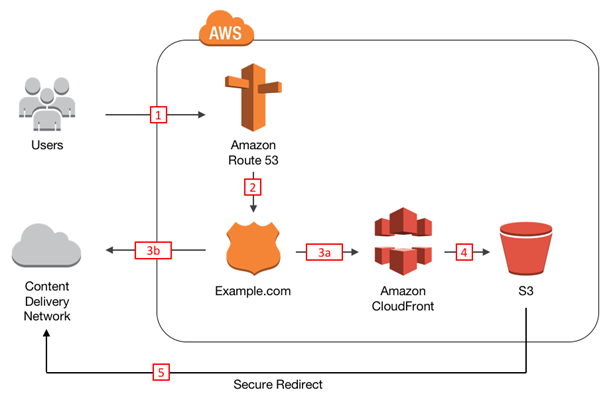
How to Protect Your Web Application Against DDoS Attacks by Using Amazon Route 53 and an External Content Delivery Network
Distributed Denial of Service (DDoS) attacks are attempts by a malicious actor to flood a network, system, or application with more traffic, connections, or requests than it is able to handle. To protect your web application against DDoS attacks, you can use AWS Shield, a DDoS protection service that AWS provides automatically to all AWS […]