AWS Security Blog
Category: Security, Identity, & Compliance

How to Move More Custom Applications to the AWS Cloud with AWS Directory Service
Some Active Directory (AD) integrated applications require custom changes to the directory schema. Today, we have added the ability for an administrator to extend the schema of AWS Directory Service for Microsoft Active Directory (Enterprise Edition), also known as Microsoft AD. Specifically, you can modify the AD schema and enable many more applications. This feature […]

How to Assign Permissions Using New AWS Managed Policies for Job Functions
Today, AWS Identity and Access Management (IAM) made 10 AWS managed policies available that align with common job functions. AWS managed policies enable you to set permissions using policies that AWS creates and manages, and with a single AWS managed policy for job functions, you can grant the permissions necessary for network or database administrators, […]

How to Enable MFA Protection on Your AWS API Calls
Multi-factor authentication (MFA) provides an additional layer of security for sensitive API calls, such as terminating Amazon EC2 instances or deleting important objects stored in an Amazon S3 bucket. In some cases, you may want to require users to authenticate with an MFA code before performing specific API requests, and by using AWS Identity and […]
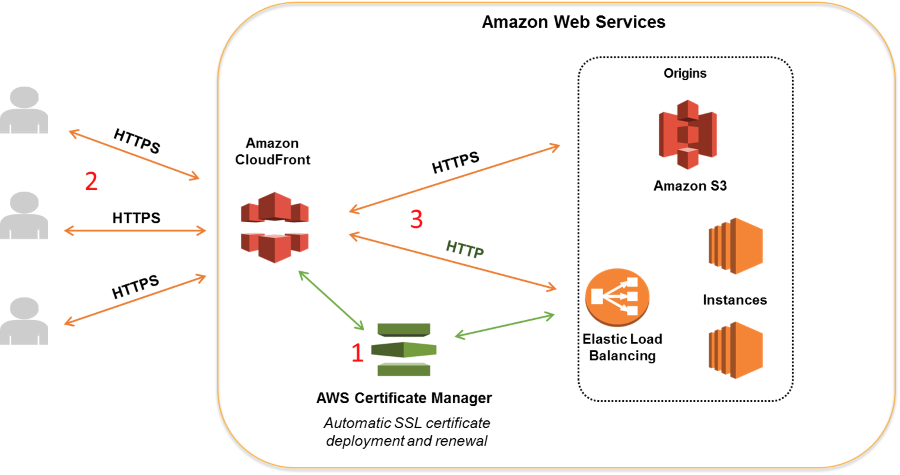
How to Help Achieve Mobile App Transport Security (ATS) Compliance by Using Amazon CloudFront and AWS Certificate Manager
Web and application users and organizations have expressed a growing desire to conduct most of their HTTP communication securely by using HTTPS. At its 2016 Worldwide Developers Conference, Apple announced that starting in January 2017, apps submitted to its App Store will be required to support App Transport Security (ATS). ATS requires all connections to […]

Automated Reasoning and Amazon s2n
In June 2015, AWS Chief Information Security Officer Stephen Schmidt introduced AWS’s new Open Source implementation of the SSL/TLS network encryption protocols, Amazon s2n. s2n is a library that has been designed to be small and fast, with the goal of providing you with network encryption that is more easily understood and fully auditable. In […]
IAM Service Last Accessed Data Now Available for the Asia Pacific (Mumbai) Region
In December, AWS Identity and Access Management (IAM) released service last accessed data, which helps you identify overly permissive policies attached to an IAM entity (a user, group, or role). Today, we have extended service last accessed data to support the recently launched Asia Pacific (Mumbai) Region. With this release, you can now view the […]
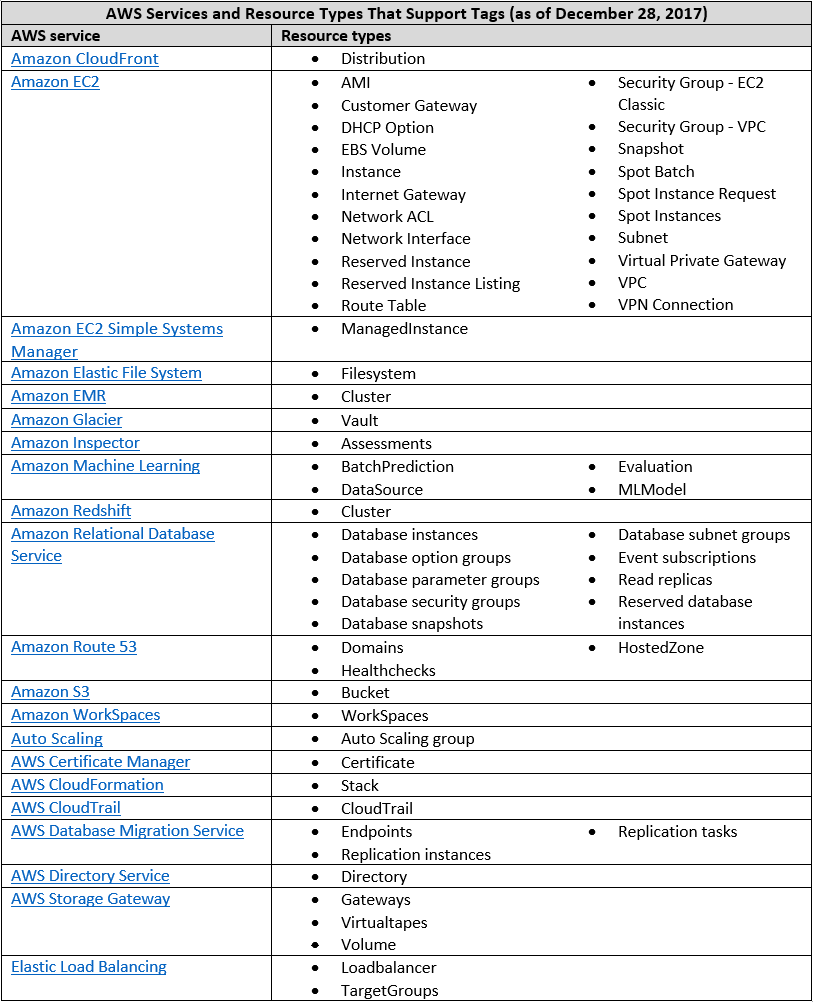
Now Organize Your AWS Resources by Using up to 50 Tags per Resource
Note: On December 28, 2017, we updated the table and downloadable documents in this blog post. Tagging AWS resources simplifies the way you organize and discover resources, allocate costs, and control resource access across services. Many of you have told us that as the number of applications, teams, and projects running on AWS increases, you […]

New! Import Your Own Keys into AWS Key Management Service
Today, we are happy to announce the launch of the new import key feature that enables you to import keys from your own key management infrastructure (KMI) into AWS Key Management Service (KMS). After you have exported keys from your existing systems and imported them into KMS, you can use them in all KMS-integrated AWS […]

Customer Update: Amazon Web Services and the EU-US Privacy Shield
Recently, the European Commission and the US Government agreed on a new framework called the EU-US Privacy Shield, and on July 12, the European Commission formally adopted it. Amazon Web Services (AWS) welcomes this new framework for transatlantic data flow. As the EU-US Privacy Shield replaces Safe Harbor, we understand many of our customers have […]

How to Remove Single Points of Failure by Using a High-Availability Partition Group in Your AWS CloudHSM Environment
A hardware security module (HSM) is a hardware device designed with the security of your data and cryptographic key material in mind. It is tamper-resistant hardware that prevents unauthorized users from attempting to pry open the device, plug any extra devices in to access data or keys such as subtokens, or damage the outside housing. […]