Artificial Intelligence
Category: AWS Quick
Data modeling patterns for AWS Quick Sight multi-dataset relationships
In this post, we shift from concepts to patterns. For each schema, you’ll find a table structure, use cases, implementation steps, and sample SQL queries. We also cover workarounds for advanced scenarios that require extra modeling steps, and close with a summary of current limitations.
Multi-dataset Topic best practices for AWS Quick Chat
This post is for data architects, business intelligence (BI) engineers, and analytics engineers building or optimizing Quick Sight Topics for natural-language Chat-based exploration.
Build a unified semantic layer across datasets with multi-dataset Topics in AWS Quick
In this post, we walk through how multi-dataset Topics work, explain how the chat agent uses defined relationships to generate cross-dataset queries, and demonstrate an end-to-end implementation using a retail analytics scenario in Quick Sight.
How AWS Finance teams reclaimed hundreds of hours with AWS Quick
In this post, we show how AWS Finance used chat agents and Flows in Amazin Quick to transform two of their most time-consuming workflows.
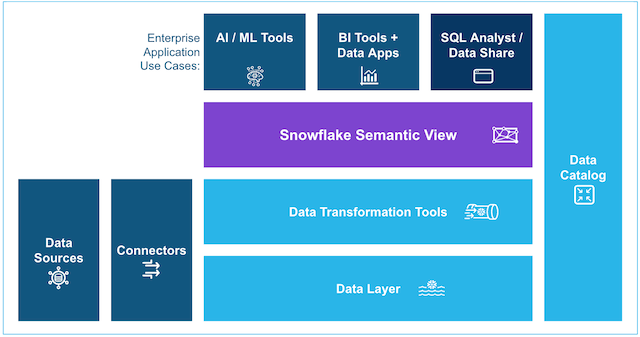
AI-powered BI with Snowflake and AWS Quick
In this post, you will learn how to build an end-to-end integration between Snowflake semantic views and Amazon Quick. The sample data is user review data for a media company. You start by loading movie review data from Amazon Simple Storage Service (Amazon S3) into Snowflake, define a semantic view in SQL to add business meaning, explore it with natural-language queries through Cortex Analyst, and then generate an Amazon Quick dataset and dashboard. The dataset can be created manually or with a provided automation script. By the end, your BI team or AI team can ask natural-language questions against a governed data layer and trust that every response reflects the same business logic.
Accelerate campaign workflow with insights from Adobe Marketing Agent for AWS Quick
This post shows how to enable Adobe Marketing Agent for Amazon Quick using a Model Context Protocol (MCP). We walk you through how to configure the integration, authenticate using your Adobe credentials, and get the latest insights in Amazon Quick. The sample workflow returns audience rankings, loyalty segment summaries, journey usage, and conflict recommendations.
Get back hours every day with autonomous agents in AWS Quick
Today, Quick gets even more powerful: new autonomous agents that work continuously on your behalf, an activity feed that helps you prioritize your most important work, and the ability to find insights across every data source your business runs on from a single question.
Build a meeting prep and follow-up assistant with AWS Quick and Cisco Webex MCP servers
This post shows how to build a custom meeting prep and follow-up assistant using Amazon Quick and Cisco Webex MCP servers. From a single prompt, the agent finds an upcoming Webex meeting, reviews prior meeting summaries and transcripts, and pulls related Vidcast highlights and transcript context. It then searches Webex message threads for unresolved follow-ups and creates a concise prep brief. After the meeting, the same assistant can summarize the discussion and identify action items. It can also find related Vidcast updates and draft a follow-up message for the right Webex space.
Spot trends faster, sort smarter: Unlocking Sparklines and Custom Sort in AWS Quick
Today, we’re excited to announce two new capabilities that make Quick Sight dashboards even more expressive and business-aligned: sparklines and custom sort for controls. In this post, we walk through both features, what they are, when to use them, and how to configure them, with real-world scenarios that bring them together in a practical, decision-ready dashboard.
Build an agentic incident triage assistant with AWS Quick and New Relic
This post shows engineering teams how to apply that principle to one of the most time-sensitive workflows in engineering: incident triage. You will build a custom incident triage assistant agent using Amazon Quick that orchestrates a response with the New Relic Model Context Protocol (MCP) Server and Asana through native integrations. From a single prompt, the Amazon Quick agent investigates the incident, assembles a root cause analysis (RCA) brief with evidence links, and creates a tracked Asana task ready for handoff.