AWS Security Blog

How to Use SAML to Automatically Direct Federated Users to a Specific AWS Management Console Page
Identity federation enables your enterprise users (such as Active Directory users) to access the AWS Management Console via single sign-on (SSO) by using their existing credentials. In Security Assertion Markup Language (SAML) 2.0, RelayState is an optional parameter that identifies a specified destination URL your users will access after signing in with SSO. When using […]

How to Prevent Uploads of Unencrypted Objects to Amazon S3
There are many use cases to prevent uploads of unencrypted objects to an Amazon S3 bucket, but the underlying objective is to protect the confidentiality and integrity of the objects stored in that bucket. AWS provides several services that help make this process easier, such as AWS Identity and Access Management (IAM) and AWS Key […]
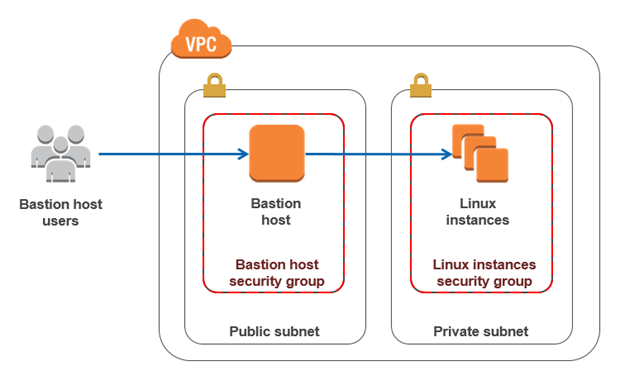
How to Record SSH Sessions Established Through a Bastion Host
A bastion host is a server whose purpose is to provide access to a private network from an external network, such as the Internet. Because of its exposure to potential attack, a bastion host must minimize the chances of penetration. For example, you can use a bastion host to mitigate the risk of allowing SSH […]

How to Set Up DNS Resolution Between On-Premises Networks and AWS by Using Unbound
In previous AWS Security Blog posts, Drew Dennis covered two options for establishing DNS connectivity between your on-premises networks and your Amazon Virtual Private Cloud (Amazon VPC) environments. His first post explained how to use Simple AD to forward DNS requests originating from on-premises networks to an Amazon Route 53 private hosted zone. His second […]

How to Manage Secrets for Amazon EC2 Container Service–Based Applications by Using Amazon S3 and Docker
Docker enables you to package, ship, and run applications as containers. This approach provides a comprehensive abstraction layer that allows developers to “containerize” or “package” any application and have it run on any infrastructure. Docker containers are analogous to shipping containers in that they provide a standard and consistent way of shipping almost anything. One […]

How to Use the REST API to Encrypt S3 Objects by Using AWS KMS
August 4, 2023: This blog post is out of date, and is in the process of being updated. AWS Key Management Service (AWS KMS) allows you to use keys under your control to encrypt data at rest stored in Amazon S3. The two primary methods for implementing this encryption are server-side encryption (SSE) and client-side […]

Frequently Asked Questions About HIPAA Compliance in the AWS Cloud: Part Two
July 19, 2021: We’ve updated this post to clarify PHI encryption requirements for Amazon CloudWatch Logs. In a previous blog post, Frequently Asked Questions About HIPAA Compliance in the AWS Cloud, I looked at some of the broad questions you have asked us about running protected health information (PHI) in the AWS cloud. In this […]

How to Automatically Tag Amazon EC2 Resources in Response to API Events
Note: As of March 28, 2017, Amazon EC2 supports tagging on creation, enforced tag usage, AWS Identity and Access Management (IAM) resource-level permissions, and enforced volume encryption. See New – Tag EC2 Instances & EBS Volumes on Creation on the AWS Blog for more information. Access to manage Amazon EC2 instances can be controlled using […]

How to Configure Your EC2 Instances to Automatically Join a Microsoft Active Directory Domain
Seamlessly joining Windows EC2 instances in AWS to a Microsoft Active Directory domain is a common scenario, especially for enterprises building a hybrid cloud architecture. With AWS Directory Service, you can target an Active Directory domain managed on-premises or within AWS. How to Connect Your On-Premises Active Directory to AWS Using AD Connector takes you […]

How to Control Access to Your Amazon Elasticsearch Service Domain
September 9, 2021: Amazon Elasticsearch Service has been renamed to Amazon OpenSearch Service. See details. With the recent release of Amazon Elasticsearch Service (Amazon ES), you now can build applications without setting up and maintaining your own search cluster on Amazon EC2. One of the key benefits of using Amazon ES is that you can […]