AWS Architecture Blog
Category: Compute
Specification-driven composition for flexible data workflows
Specification-driven composition addresses a common scalability bottleneck in data pipelines. Data pipelines often start as simple scripts, but as they grow, you duplicate transformation logic and small changes cascade across multiple workflows. Copying and modifying data transformation logic across scripts leads to workflows that become difficult to manage at scale. Tracking what each pipeline does […]
Modernizing financial analytics with Amazon SageMaker Unified Studio
Avanse Financial Services, India’s leading education loan providers, migrated to a cloud-native lakehouse architecture using Amazon SageMaker Unified Studio, which unified their data engineering, analytics, and artificial intelligence (AI) workflows in a single governed environment on AWS. In this post, we walk through their migration journey so you can adapt their approach to your own environment.

Reducing SMS OTP fraud with Vonage network-powered solutions and Amazon Cognito
In this post, we show how Vonage network-powered solutions work with Amazon Cognito to enhance many mobile-first use cases with network-level identity verification. Vonage network-powered solutions are a composable stack of real-time mobile operator intelligence, silent authentication, and integrated fraud protection, which uses the CUSTOM_AUTH flow to complete identity verification in under 5 seconds, with zero user interaction.
How Samsung achieved real-time pricing with AWS Lambda Response Streaming
In this post, we walk through the legacy architecture challenges, the stateless streaming solution, key implementation patterns, and performance results—a pattern you can apply if you’re building high-traffic APIs that aggregate data from multiple backend sources.
Building highly available Oracle databases with Amazon FSx for NetApp ONTAP
This post shows how to build a highly available Oracle database architecture using FSxN shared storage, Auto Scaling groups with dynamic AMI updates, and serverless orchestration to help reduce recovery times with current configurations.
Automating contract intelligence with Doczy.ai™ on AWS
In this post, we show you how Doczy.ai™ uses generative AI on AWS to automate contract intelligence at scale, transforming unstructured documents into structured, actionable insights, so organizations can automate critical business processes and unlock the full value of their data.
How ALS GeoAnalytics LITHOLENS ™ revolutionizes core logging through machine learning with Amazon EKS
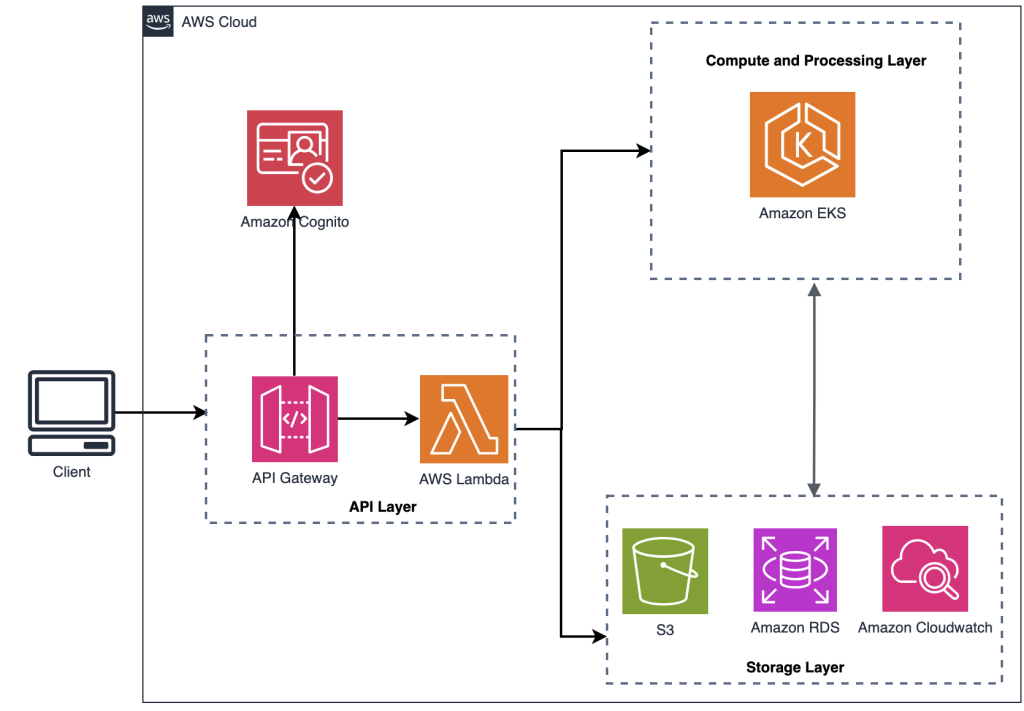
This post explores how ALS GeoAnalytics successfully deployed LITHOLENS ™ with Amazon Elastic Kubernetes Service (Amazon EKS) to scale model training and inference while minimizing cost.
How Synthesia optimizes generative AI video inference on Amazon EC2 G7e instances
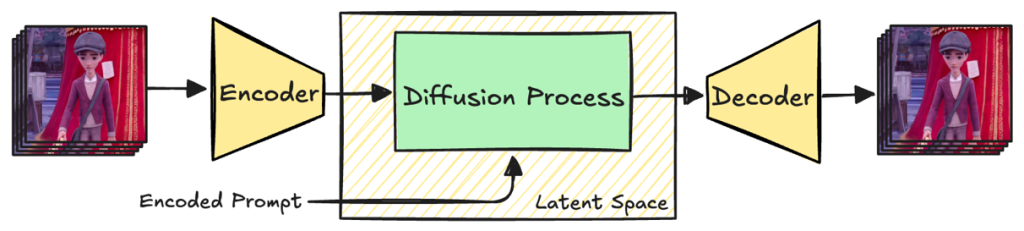
This post introduces a video decoding optimization technique that we have ideated in collaboration with Synthesia Research Engineering team, which we call Asynchronous Frame Generation Pipeline. Adopting this technique allows you to overlap GPU compute, device-to-host (D2H) data transfer, and host-side post-processing. In this post, we apply this technique to the VAE decoder of a Wan video generation model as an example, where our benchmarks on G7e show increased GPU kernel utilization from 82% to 99.9%, in turn leading to an 8.2% decrease in latency (and increase in throughput) for video decoding. We expect this technique to benefit any customer with a chunked video generation pipeline that transfers frames to host memory.
Building hybrid multi-tenant architecture for stateful services on AWS
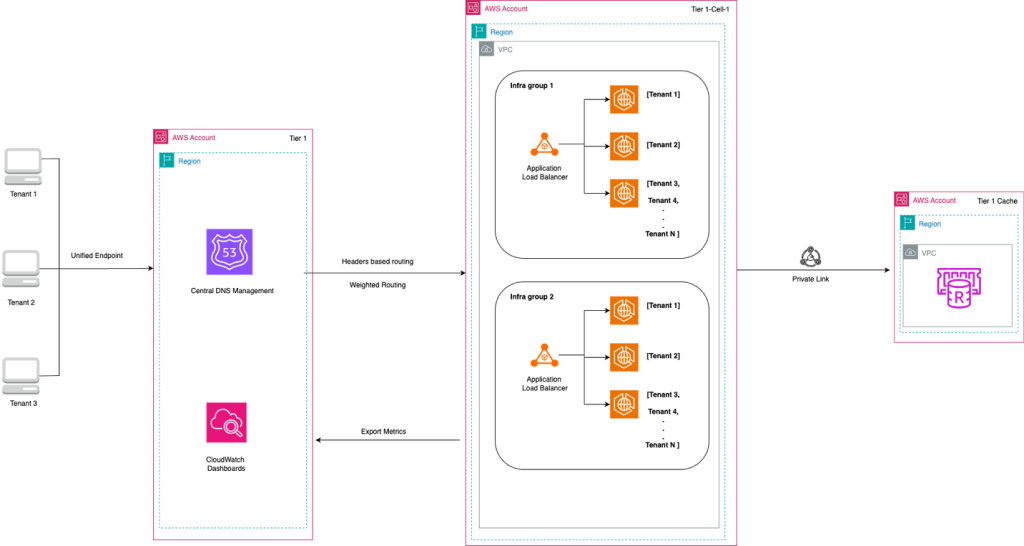
In this post, we show you how to build a hybrid multi-tenant architecture that provides strong tenant isolation without requiring per-tenant AWS accounts. You learn how to configure Route 53 weighted routing to distribute traffic across multiple accounts, deploy Application Load Balancer listener rules for tenant-specific routing, create dedicated ECS clusters per tenant, and establish AWS PrivateLink connectivity to shared dependencies.
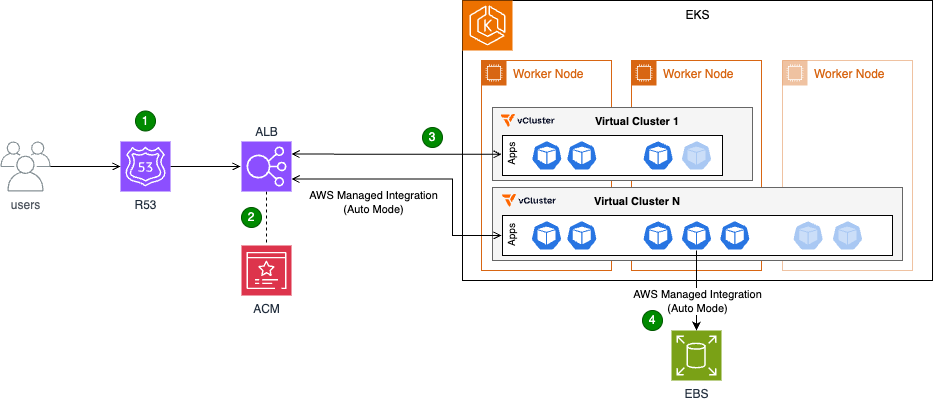
Deloitte optimizes EKS environment provisioning and achieves 89% faster testing environments using Amazon EKS and vCluster
In this post, we explore how Deloitte used Amazon EKS and vCluster to transform their testing infrastructure.